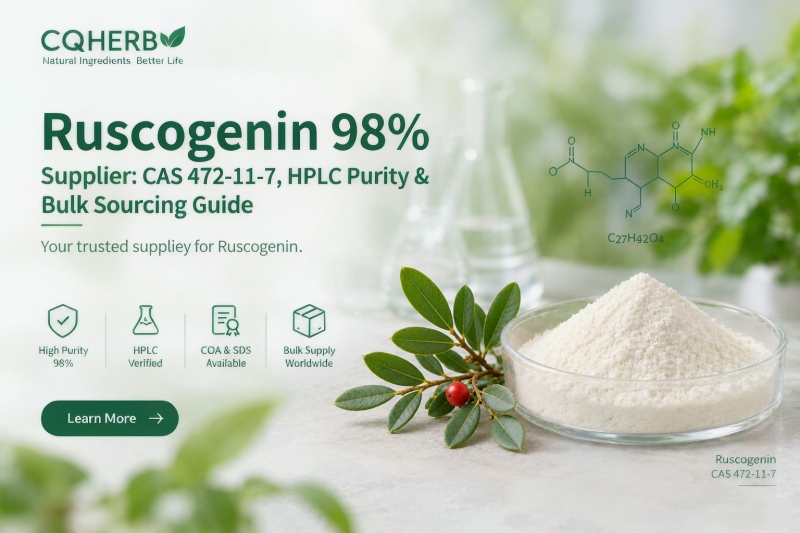
Ruscogenin 98% Supplier: CAS 472-11-7, HPLC Purity & Bulk Sourcing Guide
Nov 05, 2026
Ruscogenin 98% Supplier: CAS 472-11-7, HPLC Purity & Bulk Sourcing Guide
Quick Answer
Ruscogenin (CAS 472-11-7) is a steroidal sapogenin obtained primarily from Ruscus aculeatus (butcher's broom) root. When sourcing Ruscogenin 98%, verify four things before ordering: a batch-specific HPLC chromatogram, the botanical source statement, identity confirmation data (MS/NMR or IR), and storage-relevant documentation. Because the material is a purified single compound with a defined melting range, identity and purity can be checked analytically — which is why buyers should insist on real batch data rather than a template COA.
Key Takeaways
· Ruscogenin is a steroidal sapogenin (C₂₇H₄₂O₄, MW 430.63), not a standardized plant extract — the two are different products with different price logic.
· ≥98% HPLC is the common high-purity specification used in ingredient development and research applications.
· Request batch COA + actual HPLC chromatogram + MS/NMR data; confirm the batch number on the documents matches your shipment.
· Storage at 2–8 °C, light-protected, matters: ruscogenin is sensitive to prolonged air and light exposure.
· Solubility in water is low; formulations typically rely on ethanol- or glycol-based systems — confirm the grade and presentation with your supplier early.
· Documentation expectations differ by market; for US-bound cosmetic or research supply, confirm the intended use with your regulatory team.
1. Chemical Identity and Specifications
Item
Specification
Product Name
Ruscogenin (Ruscogenine)
CAS Number
472-11-7
Molecular Formula
C₂₇H₄₂O₄
Molecular Weight
430.63 g/mol
Botanical Source
Ruscus aculeatus L. root (butcher's broom)
Appearance
White to off-white crystalline powder
Purity
≥98% (HPLC)
Melting Point
182–186 °C
Solubility
Soluble in DMSO, ethanol; low solubility in water
Storage
2–8 °C, protected from light and moisture
Documentation
COA, HPLC, MS/NMR, SDS, TDS per batch
Ruscogenin belongs to the spirostane-type steroidal sapogenins. Its defined melting range and single-compound nature make it practical to verify identity by melting point determination, IR, or MS, in addition to HPLC purity — a useful cross-check when evaluating a new supplier.
2. Ruscogenin 98% vs. Standardized Butcher's Broom Extract
Buyers frequently compare quotations for products that are not equivalent:
Parameter
Ruscogenin 98% (purified)
Butcher's broom extract (standardized)
Composition
Single steroidal sapogenin
Complex extract containing ruscogenin plus other saponins
Purity basis
≥98% Ruscogenin by HPLC
Ruscogenin content standardized to a stated level
Typical use
Ingredient development, analytical reference, research
Formulations where a defined extract is acceptable
Price logic
Purity- and process-driven
Raw-material- and ratio-driven
Analytical identity
Sharp single HPLC peak
Multi-peak botanical fingerprint
If your specification calls for "98% ruscogenin", a 10%–30% standardized extract will not satisfy it, regardless of the price difference. Confirm the analytical basis in writing before comparing costs.
3. HPLC and COA Verification: What to Check
A credible Ruscogenin 98% batch file should include:
1. Batch-specific HPLC chromatogram — with column type, mobile phase, detection wavelength, and integration parameters, not just a percentage.
1. Identity confirmation — MS and/or NMR data supporting the spirostane structure; melting point within 182–186 °C is a quick secondary check.
1. Impurity profile — related sapogenins and process-related impurities, reported or stated as within specification.
1. Residual solvents and heavy metals — results should match the requirement set applicable to your market and intended use.
1. SDS and TDS — consistent with the COA and current for the grade supplied.
1. Batch traceability — the batch number on the COA must match the labels on the drums you receive.
A practical procurement sequence: request a 20 g sample with the full documentation package, run independent HPLC verification at a third-party laboratory, then scale to commercial quantities. CQ HERB supports this sample-first evaluation model with batch-specific documentation.
4. Solubility, Formulation Handling and Stability
Ruscogenin is poorly water-soluble, which shapes how formulators work with it:
· Solvent systems: ethanol, glycol, or DMSO-based premixes are common in development work; confirm compatibility with your final system early.
· Thermal exposure: keep processing temperatures well below the melting range and avoid prolonged heat during incorporation.
· Light and air: the material should be handled in closed containers, protected from light; long exposure to air reduces content over time.
· Storage: 2–8 °C, dry, light-protected. Shelf life is typically stated as 36 months under recommended conditions; check the retest date on the COA.
· Shipping: for warm-climate destinations, confirm insulated packaging and transit documentation with your supplier — heat exposure during transit is a common, avoidable quality issue.
5. Intended Applications and Regulatory Context
Ruscogenin 98% is supplied for:
· Cosmetic raw-material development — used by formulators as a botanical-derived active ingredient in skin and body care development; finished-product claims are the responsibility of the brand and must comply with the applicable cosmetic regulation in the destination market.
· Research and analytical applications — as a reference compound for phytochemical, chromatographic, and natural-product research.
Regulatory note: permitted use, labeling, and claim language for ruscogenin-containing products differ by market. US-bound supply may fall under cosmetic ingredient or research-material frameworks depending on intended use and how the material is presented; buyers should confirm the applicable pathway with their regulatory team. CQ HERB supplies the ingredient with technical documentation — it is not a finished product and carries no product claims.
6. Supplier Evaluation Checklist
· Batch-specific HPLC chromatogram provided
· MS/NMR or IR identity data available
· Melting range stated and consistent with specification
· Heavy metals and residual solvents reported
· Botanical source and extraction process described transparently
· COA / SDS / TDS internally consistent
· Sample available for third-party verification
· Cold-chain or insulated shipping arranged for warm destinations
· Multi-batch supply stability and lead-time transparency
Nanjing Spring & Autumn Biological Engineering Co., Ltd. (CQ HERB) supplies Ruscogenin 98% with batch-based documentation including COA, HPLC analytical data, MS/NMR, SDS and TDS, and supports sample evaluation before bulk orders. Our quality management system is certified to ISO 9001.
7. Bulk Ordering Practicalities
· Sample stage: 5 g with full documentation, suitable for independent verification.
· Development quantities: 25 g–100 g for pilot formulation work.
· Commercial quantities: 500 g–1 kg and above, scheduled against forecast; larger volumes quoted on request.
· Packaging: sealed, moisture-barrier inner packaging in outer drums; cold-chain or insulated options for warm-climate destinations.
· Lead time: confirm current stock and production schedule at quotation.
FAQ
Q: What is the CAS number of Ruscogenin? A: CAS 472-11-7; molecular formula C₂₇H₄₂O₄; molecular weight 430.63 g/mol.
Q: Is Ruscogenin the same as butcher's broom extract? A: No. Ruscogenin is a single purified steroidal sapogenin; butcher's broom extract is a complex botanical preparation that may be standardized to a stated ruscogenin content.
Q: What purity should I specify? A: ≥98% HPLC is the common high-purity grade for ingredient development and research use. Standardized extracts are a separate product category.
Q: How should Ruscogenin 98% be stored? A: 2–8 °C, dry, protected from light, in tightly closed containers. Refer to the SDS/TDS for the specific grade.
Q: Can I receive a sample before a bulk order? A: Yes. CQ HERB provides 20 g samples with batch-specific documentation so buyers can complete independent verification first.
Q: Does Ruscogenin dissolve in water? A: Solubility in water is low. Ethanol, glycol, or DMSO-based systems are typically used in development work; discuss your formulation format with the supplier.
Conclusion
Sourcing Ruscogenin 98% comes down to verification discipline: confirm you are comparing a purified compound against a standardized extract, audit the batch-specific HPLC and identity data, plan for low water solubility and cool, light-protected storage, and validate the regulatory pathway for your market and intended use. A supplier that provides real batch documentation and sample-first evaluation removes most of the risk from the purchase.
Related reading: Ruscogenin (CAS 472-11-7): A High-Purity Steroidal Sapogenin for Advanced Research · Natural Active Compounds · Cosmetic Active Ingredients
Contact CQ HERB for Ruscogenin 98% specifications, samples, and bulk supply inquiries — Ives Shen, International Sales Dept. · sale05@cqherb.com · www.cqherb.com
LEER MÁS
 Español




 Red IPv6 compatible